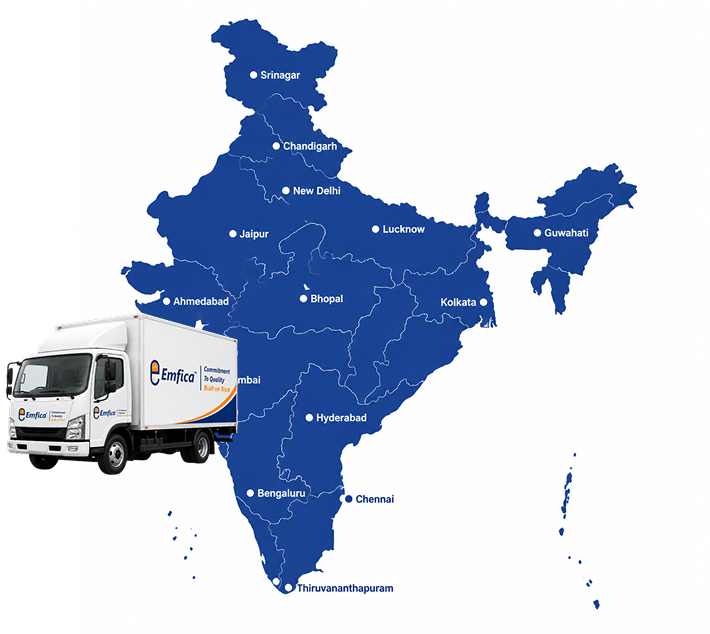
Technology Integration Modern PCD Pharma companies leverage advanced technologies for efficient delivery: ERP Systems for real-time inventory tracking Warehouse Management Systems (WMS) for optimal storage GPS Tracking for shipment monitoring Blockchain Technology for supply chain transparency AI-powered Demand Forecasting for inventory optimization Delivery Timelines and Service Standards Standard Delivery Schedules Most PCD pharma companies maintain specific delivery timelines to ensure consistent supply: Manufacturing to Dispatch: 30-40 days from order confirmation Regional Distribution: 10-12 days via surface transport Express Delivery: 1-2 days for urgent requirements Local Distribution: Same-day or next-day delivery within city limits Service Level Agreements PCD companies typically guarantee: On-Time Delivery (OTIF - On Time In Full) performance above 95% Product Integrity maintenance throughout the supply chain Real-time Tracking and shipment visibility Emergency Delivery options for critical medications Return and Recall management systems Specialized Warehouse and Storage Solutions Good Distribution Practice (GDP) Compliance PCD pharma companies maintain GDP-compliant warehouses that ensure: Temperature Monitoring with automated alert systems Humidity Control to prevent product degradation Security Systems with 24/7 surveillance and access control FEFO (First Expired, First Out) inventory rotation Contamination Prevention through segregated storage areas Documentation of all storage and handling procedures Regional Distribution Centers Strategic placement of warehouses across India enables efficient delivery: North India: Delhi, Chandigarh, Lucknow West India: Mumbai, Pune, Ahmedabad South India: Bangalore, Chennai, Hyderabad East India: Kolkata, Bhubaneswar Payment and Documentation Systems Financial Transaction Methods PCD pharma companies offer flexible payment options: Draft on Delivery (DOD) - Payment through demand draft upon delivery Credit Terms - Extended payment periods for established partners Digital Payments - Online transfers and digital wallets Account Ledger - Comprehensive transaction tracking Documentation Requirements Every delivery includes proper documentation: Goods Receipt (GR) or Lorry Receipt (LR) Tax Invoices with GST compliance Batch Certificates and COA (Certificate of Analysis) Temperature Logs for cold chain products Delivery Acknowledgment from recipients Quality Assurance and Regulatory Compliance Product Integrity Maintenance Throughout the delivery process, PCD companies ensure: Tamper-evident Packaging to prevent contamination Batch Tracking for complete traceability Expiry Date Management to prevent expired product distribution Quality Control Checks at every distribution point Recall Procedures for defective products Regulatory Adherence All delivery operations comply with: CDSCO Guidelines for pharmaceutical distribution Drug and Cosmetics Act requirements GST Regulations for taxation and documentation State Licensing requirements for distribution International Standards like WHO-GMP for export products Challenges and Solutions in Delivery Common Delivery Challenges PCD pharma companies face several logistical challenges: Infrastructure Limitations in rural and remote areas Temperature Maintenance during extreme weather conditions Regulatory Compliance across different states Inventory Management balancing stock levels and expiry dates Last-mile Delivery to remote healthcare facilities Innovative Solutions To address these challenges, companies implement: Hub-and-Spoke Models for efficient distribution Local Partnership Networks for last-mile connectivity Advanced Forecasting to optimize inventory levels Mobile Cold Storage units for flexible deployment Digital Platforms for real-time communication and tracking Future of PCD Pharma Delivery Emerging Trends The pharmaceutical delivery landscape is evolving with: Drone Delivery for remote area access IoT-enabled Tracking for enhanced visibility Artificial Intelligence for predictive logistics Sustainable Packaging for environmental compliance Direct-to-Patient delivery models Digital Transformation PCD companies are increasingly adopting: Cloud-based Platforms for scalable operations Mobile Applications for field force management Automated Warehousing for improved efficiency Big Data Analytics for demand prediction Blockchain Integration for supply chain transparency